
張盈盈
ㅤㅤ紹進和我分別在1967年從哈佛大學拿到博士學位以後,紹進先在普林斯頓的高深研究院做博士後兩年,女兒Iris張純如在那裡岀生,然後先生被聘到伊大物理系當助理教授。我們於1969年夏天搬到C-U。來的候,舉目無親,一個朋友都沒有。我們當時是住在香檳城西面的Crescent Drive 上一幢Duplex。我們租了一邊。這個房子對面是Centennial中學。房子是剛造好的新屋。那時候女兒才一歲半。房東是對面中學的體育老師,人非常和善,告訴我們香檳城市有一家東方店叫Ginza,有東方蔬菜雜貨之類的物品。我們高興了,紹進馬上就去看看。那天紹進回家興冲冲的告訴我,在這東方雜貨店裏碰到一位伊大園藝系的教授叫朱之鈺先生。原來紹進問雜貨店老闆有沒有韮菜,此時朱先生也在買菜就跟先生聊起來了。朱先生告訴紹進,要韮菜的話可以到他家去割,又告訴他韮菜很容易長,需要的話可以到他家去挖來種。這下子,紹進樂不可支,回家之後馬上帶了手套去朱先生家去挖韮菜了。因為紹進特別愛吃韮菜。目前C-U很多教授家後院的韮菜很可能是來自我們家,但最早的是來自朱先生家的。從此我們愛上了C-U,感到這裡的人非常有人情味!我們在Crescent Drive 的 Duplex 住了兩年,在這個房子兩年裏,兒子Michael 純愷出生了,紹進此時發表了他被物理界引用最多的論文,是他在研究高能粒子理論物理領域裏的高峯時期。1971 年我們買下我們的第一幢坐落在香檳南邊的BroadmoorDrive的房子。這是一幢一層紅磚牆的舊房子。
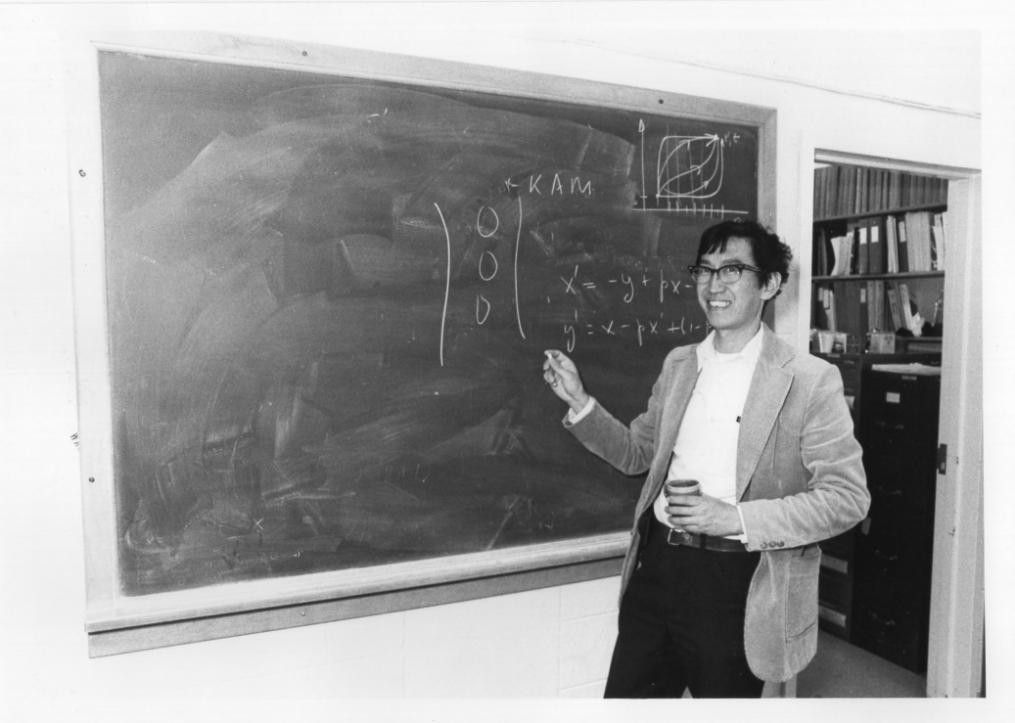
那時美國正值能源危機,很多大學凍結預算,紹進兩年升為副教授,但是系主任抱歉說因為危機,校內所有教授薪水凍結。我們正買了房子,帶著兩個幼兒搬了家,我決定返回學校去做事,可以貼補家用。我在伊大生化系做半職研究員。
ㅤㅤㅤ在Broadmoor Dr 的房子只住了三年,但其中一年我們把房子租給別人,因為紹進拿到SloanFoundation 的獎金,他又帶著全家去普林斯頓高深研究院做研究一年。那是1972年女兒純如快五歲、兒子純愷兩歲。
ㅤㅤ在1972年純如上幼兒園時我就萌生了成立中文班的構想,使孩子們可以學中文。因此結識了伊大中文系的鄭錦全教授和他的夫人梁慕琴。我們遊說鄭教授來一起成立中文班,由鄭教授執教。鄭教授是國際知名的語言專家,由他來教小孩中文實在委屈了他,好在他們的女兒蹦蹦也要學中文,因此我們成立了中文班。此中文班一直延續下去好多年,直到我們2003年離開C-U還存在。1974 年我們認識了C-U的許多伊大教授,如電機系教授劉兆漢,其夫人孟粹珠,他們也是支持小孩學中文的。很多伊大華人教授住在厄巴納的YankeeRidge小學附近。這是一個當時比較新的區域,同時因為我們在香檳的房子太小,所以我們就買了一幢位於McHenry Street 的 Tri-level 的房子,於1974年搬到厄巴納來了。兩個孩子陸續進入了YankeeRidge 小學。這幢房子是新建的,紹進和我在前院後院舖草皮,種楓樹,忙得不亦樂乎。紹進當然把香檳家的韮菜移過來了。我們種了各種蔬菜如茄子,四季豆,辣椒。紹進很喜歡種菜,有一年夏天放假後,聽伊大朋友JohnFeng說可以在伊大校園南邊的的牛場去挖牛糞來做肥料,這個天然肥把我們的蔬菜長得又肥又大,吃都吃不完。
ㅤㅤ在這個房子裏的記憶是孩子們交了好多伊大教職員的孩子們,成了終生的朋友。如住在我們附近的劉兆漢夫婦和楊光羲和夫人RandyYang,還有伊大森林系教授周浦和其夫人郭愛玉。他們的孩子們AliceLiu,Robert Liu,Elaine Yang,Eugenia and Andrew Chow和純如、純愷都是在YankeeRidge 小學和伊大附中讀書一起長大。還有住在對面不遠的伊大土木系教授文義歸,及其夫人馬雨田,他們的大兒子Peter中中和純愷一起上學。
ㅤㅤ在這幢房子裏最值得回憶的是我們那時一群就此伊大華人教授,小孩也差不多大,我們彼此常常來往,又因為小孩週末上中文班,大家都經常見面。我們每個月大家就輪流開放家庭聚餐一次。每家帶一樣菜,東家除預備茶點水果外總是做了許多菜,每家都捧出自家拿手好菜,菜餚豐富,往往剩下好多菜。記得那時聚餐的家庭有:劉兆漢夫婦,鄭錦全夫婦,周浦夫婦,土木系的錢興格夫婦,文義歸夫婦,楊光羲夫婦等,後来增加到十家。这個聚餐是帶孩子的,所以熱鬧非凡。孩子們一起玩得好開心,記得我們的純愷約六、七歲,和文義歸的兒子中中拿著玩具槍,跑上跑下把我們的牆壁還打了一個洞。
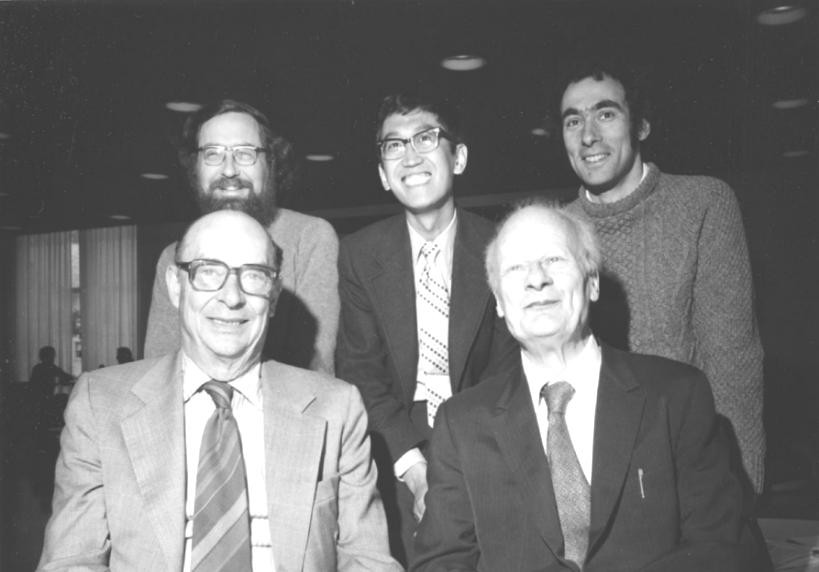
张绍晋于1977年4月在厄巴纳的卢米斯实验室与同事合影。前排,从左到右,约翰·巴丁和汉斯·贝特;后排,从左到右,克里斯·佩西克、张绍晋和戈登·贝姆。
照片版权归伊利诺伊物理学所有,感谢美国物理学会Emilio Segrè视觉档案馆提供這些都是非常甜蜜的回憶。
ㅤㅤ其中一年,紹進在物理系主持的全系學術研討會,多半是會請比較有名的外校教授來演講。因為他是主辦人,每次演講完後,他得陪演講人去吃晚餐,然後帶他回到家裏和系裏教授、研究生等到我們家開一個餐後party。每次這種情況,我們要招待大家。有次楊振寧來演講,那個晚上我和紹進請了楊大師演講完後到我們家吃晚飯,還請了一些系裏的教授作陪。飯後很多研究員、學生來家派對。把我們不大的客廳擠得滿滿的。因此純如認識了這位諾貝爾獎的得主,後來她寫錢學森傳的時候還請教過楊振寜教授!
ㅤㅤ1978 年土木系的錢興格教授在YankeeRidge Subdivision 造了一幢新房子,還沒造好,他就決定離開伊大,因此說服我們買了他新造的房子。這房子很大,我們在此住了24年直到我們離開C-U。這房子離我們在McHenry Drive 的房正南一哩,二樓的窗戶向北可以瞭望新開闢的Prairie Garden,之前是一片美國中西部典型的草原,有一條小溪,兩岸許多柳樹和橡樹,還有數不盡的玉米田。天氣好時還可以看到厄巴納的遠景。這些景象大概就是女兒純如寫詩的靈感。孩子在此長大,由小學,中學到大學,然後離巢飛走了。
ㅤㅤ在Yankee Ridge Subdivision 此幢房子裏的記憶太多了!1980年中國大陸改革開放,第一批科學家被邀請回國的是楊振寧和李政道帶領的海外50幾位物理學家,紹進也是被邀請之一。他們在1980年初到廣州開全球物理會議。那是大陸文化大革命後首次與海外學者交流。他們一行還到北京,被鄧小平接見,在那會議裏,紹進也見到大陸的科學家像錢三強、錢學森等。
ㅤㅤ因為大陸文革之後急著要建立科學基礎,尤其物理方面,因此不斷地派物理學家來美國訪問交流。當時紹進是物理系的為數不多的華人教授,為此他擔任起物理系和大陸學術研究交流的橋樑。來訪的中國物理精英一批一批來伊大物理系訪問,他們當然想見物理大師、兩次諾貝爾物理學獎得主的 John Bardeen 教授。每次Bardeen 夫婦都邀請我們作陪。我們也邀請訪問團和Bardeen夫婦來我們家作客。因此我們和Bardeen教授夫婦變得很熟。他們和藹可親,一點諾貝爾獎得主的架子都沒有,尤其他太太非常隨和,具有美國中西部人誠懇謙柔的氣質。純如一直感覺到很榮幸她可以親自見到Bardeen還得到他的親筆簽名。
ㅤㅤ記得有一次中國物理學家代表團十幾個人來訪,(只記得當時代表團裏有一位郭沫若的兒子郭漢英)我們招待他們和伊大物理系教授一共20多人來我們家吃飯,我居然做了一桌菜招待他們吃晚餐,那時還做事上班。現在想起來是滿有勇氣的,因為當時我還年輕。
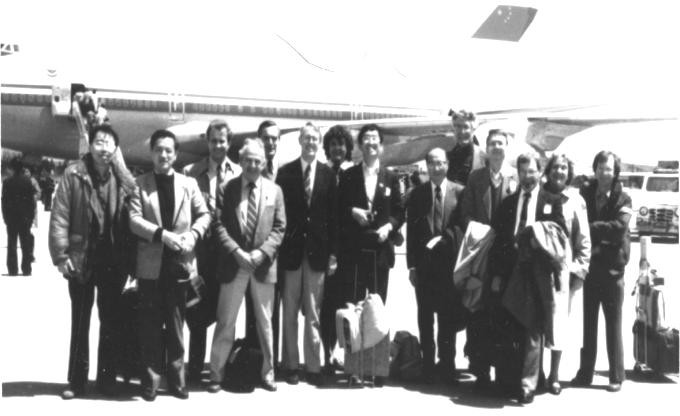
ㅤㅤ在1984年四月,伊大校長Stanley O.Ikenberry 要組織伊大代表團正式訪問大陸。代表團包括物理、化學、電機、機械、材料、政治等系的教授。物理系代表有系主任Ralph Simmons 和既是物理系教授又是伊大教EdwinGoldwasser,加上紹進和另一位教授JamesWolfe。伊大代表團與北京的中國科學院和上海的復旦大學在四月份正式簽約促進學術研究交流。那次代表團的中國教授除張紹進外,還有電機系的薩支唐教授,機械系的趙佩之教授和政治系的于子橋教授。他們在當時都是我們的好友知名的教授。
ㅤㅤ紹進於1999年、我於2000年由伊大退休後因為孩子都在加州,我們於2003年11 月搬到加州SanJose居住。時間真快,一晃就是21個年頭。我們人雖然在加州,但心仍想念著住了34年的C-U的校園。我們在那裡渡過我們最好的年華,還有結識了許多志同道合的老朋友。今年1月25日紹進去逝後,更是懷念著他們,我僅以此文獻給這些與我們一起走過快樂時光的老朋友們!
ㅤㅤ如果有人有興趣想瞭解紹進在理論物理上的工作,下面是伊大物理系網頁上對他一生的介紹。
https://physics.illinois.edu/people/memorials/chang
Shau-Jin Chang (1937–2025)
Emeritus Professor of Physics and former Associate Department Head Shau-Jin Chang( 張紹進), 88, passed away on January 25,2025, at his home in San Jose, CA. Atheoretical particle physicist, he joined the Illinois Physics faculty in 1969 and retired in1999. He published nearly 100 research papers on theoretical particle physics and is the author of the critically acclaimed book Introduction to Quantum Field Theory, published in 1990.
Chang was born in Suqian, Jiangsu Province, China, on January 7, 1937. He escaped to Chongqing with his parents during the Japanese invasion of China during World War II. This period was deeply embedded in his memory and years later inspired his daughter Iris to write the historical bestseller The Rape of Nanking.
Chang arrived in Taiwan with his mother in 1951. He attended the Department of Physics at National Taiwan University after placing first in the joint college entrance examination. After graduating with honors in mathematics and physics, he received a master’s degree in physics from Tsinghua University in Taiwan. In 1962, he enrolled at Harvard University to study physics under Professor Julian Schwinger, receiving his doctorate in 1967.
From 1967 to 1969, Chang held a postdoctoral research appointment in high energy theoretical physics at the Institute for Advanced Study in Princeton, NJ. Following this, he joined Illinois Physics in 1969. Chang was a Sloan Fellow from 1972 to 1974 and was elected a Fellow of the American Physical Society in 1976.
Much of Chang’s scientific life involved the applications of quantum field theory to elementary particle physics. After early papers studying the quantization of higher spin particles, he became a pioneer in the theory of very high-energy interactions in the infinite-momentum frame. This work was both important and timely because, starting around 1968, exciting discoveries were being made at the Stanford Linear Accelerator Center (SLAC) that showed the reality of the quark (parton) constituents of nucleons. The full exploitation of the data being produced by the high-energy electron-nucleon collisions required novel theoretical techniques, and the infinite-momentum frame provides simplifications that allow for a clean modeling of parton effects. Chang’s co authors at this time included Shang-Keng Ma, Lochlainn O’Raifeartaigh, R (Doug) Rajaraman, Roger Dashen, Francis Low, Sam Treiman, and Tung-Mow Yan. Yan was Chang’s contemporary as a student of Julian Schwinger. Chang also collaborated with David Campbell, who would later serve as head of Illinois Physics.
Shau-Jin’s 1975 paper, “Chiral confinement: an exact solution of the massive Thirring model,” co-authored with Stephen D. Ellis and Ben Lee, has had an impact far beyond particle physics. It reveals how a particle obeying the Dirac equation can be trapped in a domain wall where some scalar field changes sign. This work is the progenitor of entire fields of applications of topology to physical systems. It directly and indirectly led to the discovery of fractionally charged quasiparticles in condensed matter systems, topological anyons (with possible applications to quantum computing), and the conducting surface states in topological insulators. It also hints at why the weak interactions only interact with left-handed particles; this might be due to our universe being such a domain wall and all matter comprising the trapped particles.
In the late 1970s through the 1990s, Chang’s work took a new direction. After a collaboration with Nathan Weiss on the classical instability of the field equations in quantum chromodynamics (QCD) and the realization that the subsequent motion might be chaotic, Chang began a systematic and highly cited exploration of chaos in classical mechanical systems and the related notion of iterated maps. A remarkable byproduct of this work is a beautiful theorem in pure mathematics that generalizes to n dimensions the classical theorem of Poncelet on polygons that simultaneously inscribe and circumscribe a pair of conic sections.
Chang was a very interactive and valuable member of the department. Illinois Physics Professor Gordon Baym remarked that, “Shau-Jin was the person I could turn to for wisdom on almost any question in physics.” Chang was a mentor who took his students seriously and was dedicated to teaching. He won the Illinois Physics Best Teacher Award many times. He received the Distinguished Alumni Award from the Department of Physics, National Taiwan University.
Chang’s daughter Iris summed it up at his retirement party in 1999:
“My father, too, represented an ideal for me to aspire to. He is perhaps one of the most idealistic people I know—one of the rare individuals on this earth motivated solely by the pursuit of knowledge, rather than personal ambition … Money, power, social status—all of these things meant nothing to him unless he could enjoy a quiet intellectual life, doing the two things he loved most: physics and the nurturing of young minds. I consider him blessed because he found that life at the University of Illinois.
Father also possessed a strong sense of justice. I always believed that had he not become a physicist, he would have made an excellent judge. He had a keen sense of what was fair, as well as the uncanny ability to perceive an issue from all different points of view. But he also had a deep compassion for others, an intuitive understanding of human weakness, and a genuine sympathy for the underdog, a feeling that extended even to animals. Nothing distressed him more than to see a helpless creature hurt, just as nothing infuriated him more than to see a blatant abuse of power.
Perhaps what I admire most about my father is that he never lost that childlike wonder for the world. Rare in a world of cynics, Father has retained his fascination for the universe and for all the mysteries that lie within. For him, education is a lifelong endeavor. … He is what Einstein would have considered the quintessential intellectual— the person who learns for the same reasons a child wants to learn … for love, curiosity, and the sheer thrill of discovery.”
Chang is survived by Ying-Ying Chang, his wife of 60 years, as well as his son Michael Chang, a computer engineer. His late daughter Iris Chang passed away in 2004.
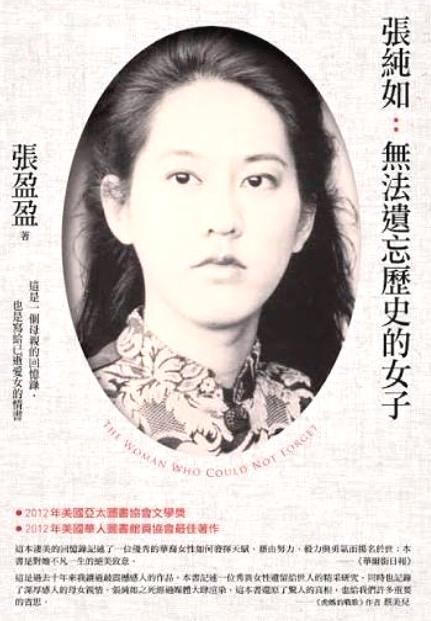
張盈盈是張純如的母親。哈佛大學生物化 學博士,伊利諾伊州大學微生物系研究副 教授(退休)。2011年出版對愛女張純如 的英語回憶錄“TheWomanWhoCouldNot Forget”,其中文翻譯本《張純如: 無法忘 卻歷史的女子》(簡體與繁體)于2012年 出版。