

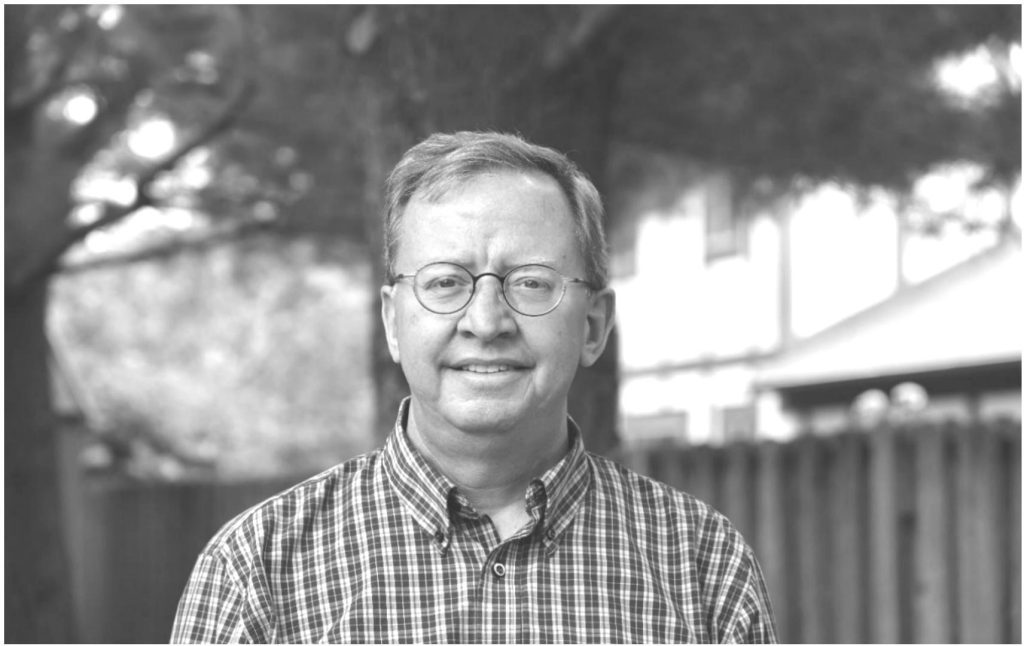
Craig Chamberlain
Americans take great pride in our democracy, imperfect as it is. We highly value our freedom and our right to vote, and we’ve taken stable government for granted.
Though some get very involved in politics, many of us think we can focus on other things and democracy will take care of itself.
Recent years, however, have strongly challenged this confidence. People on both sides of the political divide now find reasons to doubt whether democracy will even survive.
How did this happen?
Those of us involved in the national group Braver Angels see polarization at the heart of it–the pronounced and growing fear, distrust and even hatred of the “other side”. We see polarization eroding even the strongest of our institutions and democratic assumptions.
What has led us to this polarization? There are many theories about the forces and trends. Among them: a decline in social connections, as well as in civic and religious organizations; greater incentives in politics and the news media to promote extreme division; and social media that profit by directing us into silos of fear, outrage and grievance (or FOG, as one podcaster puts it).
Braver Angels, however, is determined to build bridges across the partisan divide despite all that, and to strengthen democracy in the process.
I learned about Braver Angels more than two years ago through a television news story. I was less than two years into retirement and looking for a cause, and the state of politics was on my mind.
Working in a news office for the University of Illinois made me constantly aware of how stories could be skewed or framed to reinforce division, and how partisan news outlets and social media could make such stories “go viral”–just one more battle in the “culture war.” I’d also always been fascinated by the political divisions within my immediate family, which range significantly from liberal to conservative (or blue to red). How could we think so differently? How do I change their minds? (You likely can’t, especially not through direct attack.)
But mostly I just worried about the extremes of America’s division, the heated exchanges with no one listening, the broken relationships, the continual downward trend in incivility. Where would it end?
The name Braver Angels comes from President Abraham Lincoln’s appeal to the “better angels of our nature” in his first inaugural address in 1861, as civil war loomed on the horizon. We started as Better Angels but then evolved to Braver Angels, and it’s appropriate. It takes bravery to confront our differences in a productive way, especially when the tide is flowing so strongly against us.
Despite the label “angels,” the organization is not religiously based, though its principles have obvious appeal for faith groups. It has outreach efforts aimed at faith groups, as well as legislators, universities, schools, and the media. It’s also connected with hundreds of other groups doing related work.
In December 2016, shortly after that year’s presidential election, about 20 people– divided between Hillary Clinton and Donald Trump voters – came together for a weekend in South Lebanon, Ohio.
Moderators leading sessions that weekend promoted methods for better listening, understanding other points of view, and challenging stereotypes. Many of their methods were drawn from marriage counseling. New relationships were formed and friendships made, across the political divide.
That first weekend led to a bus tour and workshops in various states, and from that grew Braver Angels.
My own involvement grew from seeing that first news story, then doing an online workshop on politics and family, to attending a local Town Hall event in early 2023 with more than 200 others. It took me another year to really dive in with the East Central Illinois Alliance (or chapter), based in Champaign- Urbana. It was the first local alliance in Illinois, started in 2021.
Given my news background, I was soon filling the role of co-chair for a committee producing “Braver Conversations” columns for the local News-Gazette newspaper–more than 20 published so far. In 2025 I served as a co-chair of the alliance. (All leadership positions in Braver Angels are split between co-chairs, one red and one blue.)

I think my story reflects the range of ways someone can be involved. Some people just want to stop arguing with family or friends over politics, and you can learn methods for doing that. (Be prepared for self- reflection). Some might just want to absorb more of Braver Angels’ philosophy and methods through articles, podcasts and videos. Some might want to actively engage with others through workshops, discussions and civil debates, either online or in-person. None of this requires being an active part of a group.
But for those who want to be involved in- person, our local group generally meets on the last Tuesday of each month at the Champaign Public Library. (For details, email [email protected]) Each meeting includes a program dealing with some issue related to polarization–social media, immigration, and free speech being some examples–or an exercise in how to talk across partisan lines.
One spring (2025) program, for instance, included an exercise in which reds and blues took turns in a “fishbowl” exercise where they talked about the pros and cons of their side while others observed, followed by a discussion about what was learned.
Other local activities have included a workshop on “How to Disagree Better,” a Braver Angels-style debate on healthcare, and a bi-monthly screening called Film Nite.
Braver Angels’ mission is to depolarize the country and, in the process, strengthen democracy. Yet for many people who care about democracy but also care deeply about their side in the political debate, that also makes the idea of Braver Angels hard to process or accept.
They may feel that now is a time to fight for their cause, not talk to those opposing it. They might view Braver Angels as a simple picture of naive people coming together, holding hands in a circle, and just ignoring their differences.
But Braver Angels is not just for the peacemakers, but for the skeptics and even cynics who know our democracy isn’t working well and are looking for ways to fix it. Talking across the divide, exploring how others think, and even finding common ground is part of that fix. People often agree on a lot more than they realize.
The trend toward greater fear, outrage and grievance only leads to more of the same.
Opposing that forceful trend, however, takes courage. It’s better to focus on the “braver” rather than the “angels.”
Craig Chamberlain has been involved in Braver Angels locally since early 2024, first as co-chair of a team writing columns for the News-Gazette and then as co-chair of the local alliance (or chapter). He retired from the University of Illinois News Bureau, where he wrote about faculty work in a variety of fields for more than 30 years.